
Zone 0 Is Back: Revised Wildfire Rules Re-Adopted in November, and the Insurance Discounts That Go With Them
The state pulled its first Zone 0 package in September and re-adopted a revised version on November 5. Here’s where it stands, what it asks within five feet of your house, and how hardening work can lower your insurance.
Get a free estimate
Name, phone and ZIP — Mike calls or texts you back within 9 minutes.
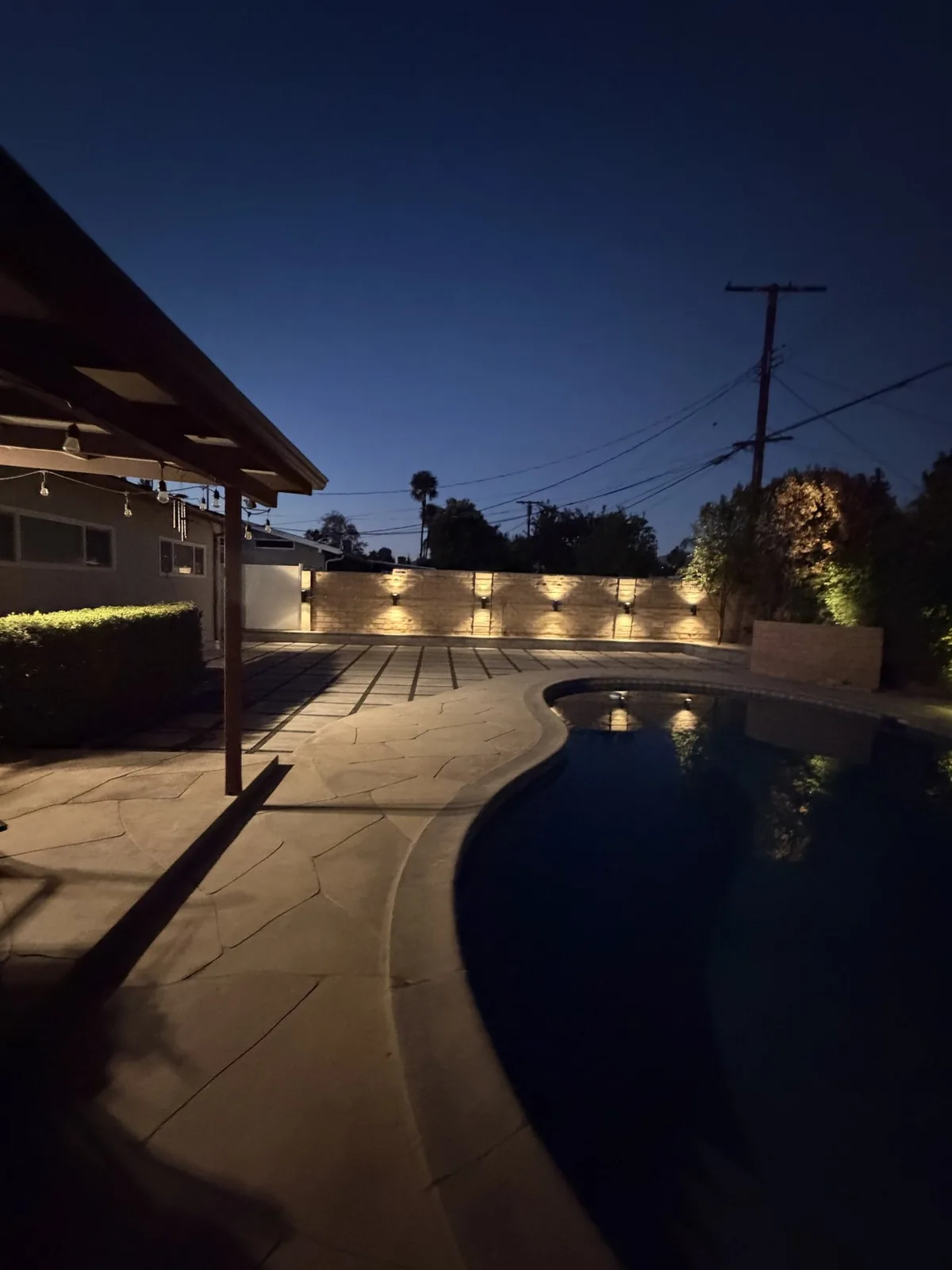
If you live in or near the hills around the San Fernando Valley, you have probably heard about “Zone 0” — California’s planned rules for the first five feet around a house. The story took a turn this fall: the state’s first package was withdrawn in September, and a revised version was adopted on November 5, 2026. Here is where things stand, what the rules ask, and how the same work can count toward lower insurance premiums.
What happened: adopted, withdrawn, re-adopted
- August 19, 2026: the State Board of Forestry and Fire Protection adopted emergency Zone 0 regulations under AB 3074.
- August 28: the package went to the Office of Administrative Law (OAL) for review, as file 2026-0828-03E.
- September 8: OAL lists that file as “Withdrawn” — it was neither approved nor rejected, so it never took effect.
- November 5: the Board adopted revised emergency Zone 0 regulations. As of November 9 they had not taken effect; the Board’s notice anticipates sending them to OAL on or after November 13.
- Next: a five-day public comment period starts when OAL posts the filing. If approved, the rules take effect when filed with the California Secretary of State.
In short: Zone 0 is not law yet, but it is moving again, and the effective date could come soon after OAL review.
Does it apply to my property?
Zone 0 applies throughout State Responsibility Areas and, in areas where cities and counties handle fire protection (like the City of Los Angeles), only inside designated Very High Fire Hazard Severity Zones. It does not apply to local-responsibility properties outside a Very High zone. Whether your lot is in one depends on the exact address, so check the state’s Fire Hazard Severity Zone map or ask your fire department before planning around it.
What Zone 0 asks within five feet of the house
- No bark or wood-chip mulch next to the house — replace it with something noncombustible, such as gravel.
- No firewood storage and no new trees in the zone.
- Roofs and gutters kept clear of leaves, needles and other combustible debris.
- Plants kept away from the most vulnerable spots: under eaves, within two feet of windows, doors and vents, and within five feet of attached decks, stairs and pergolas. Low lawns and small, spaced plantings are allowed within limits.
- Fences and gates attached directly to the house must be entirely noncombustible.
- A self-supporting deck, stairway or pergola within one foot of the building counts as attached.
- Small sheds (under 120 sq ft) in the zone must be entirely noncombustible.
New projects vs. existing homes
The revised text uses the date of the initial building permit application to separate new construction from existing homes and projects already underway. New buildings would have to meet all applicable Zone 0 requirements once the rules take effect. Existing homes get a phase-in:
- When the rules take effect: clear roofs and gutters, remove dead branches, keep branches at least 10 feet from chimney outlets, and build any new fence or gate within five feet of the house from noncombustible material.
- Within three years: remove firewood and other restricted materials from Zone 0, clear under decks, balconies, stairs and pergolas, and remove ladder fuels.
- Within three to five years: meet the clear-buffer and planting standards and bring existing attached fences and gates into compliance. Local ordinances can set the timing of this last phase in local-responsibility areas.
The insurance side: Safer from Wildfires discounts
Separately from Zone 0, California’s insurance regulation “Safer from Wildfires” (10 CCR § 2644.9) requires insurers to build wildfire-mitigation discounts into their rates. The Department of Insurance updated its homeowner FAQ in September 2026. The actions it lists include:
- A Class A fire-rated roof.
- A five-foot ember-resistant zone around the house.
- Noncombustible material on the bottom six inches of exterior walls.
- Ember- and fire-resistant vents.
- Double-pane windows or added shutters.
- Enclosed eaves.
- Cleared vegetation and debris under decks, and sheds moved at least 30 feet from the home.
- Defensible space that meets state and local law, plus community programs like Firewise USA.
Insurers must give you your wildfire risk score when you apply and before a renewal or non-renewal, explain how to lower it, and state the savings in actual dollars for mitigation steps you haven’t taken yet. After you finish a measure, you can ask for a revised score, which the insurer must provide within 30 days; you can also appeal a score you think is wrong. Insurers that require an inspection must offer a free option and accept inspections by CAL FIRE or a local fire department. Savings start with the next policy period, and the California FAIR Plan offers mitigation discounts too. The Department’s FAQ also notes that all of Los Angeles County is on the state’s 2024 Fire Risk Reduction Community list, one of the community-level factors.
What this means for a remodel or addition
- If you are applying for a permit for an addition or ADU in a Very High zone, assume Zone 0 will apply to the new structure and design the first five feet that way: hardscape or gravel instead of mulch beds, no attached wood fence, careful placement of decks and pergolas.
- A re-roof, window replacement or exterior remodel is the natural moment to do the items insurers recognize — Class A roofing, ember-resistant vents, dual-pane windows, enclosed eaves and a noncombustible strip at the base of the walls.
- Keep photos, permits and invoices of the work. Insurers may ask for proof before applying a discount.
- Ask your insurer or broker for your current risk score and the dollar savings per measure before deciding what to do first.
BFF Construction and Design (CSLB #1109001) is a licensed general contractor based in Sylmar, building remodels, additions and ADUs across Los Angeles and Orange County. We can plan exterior work and hardscape around the five-foot zone as part of your project and give you the documentation of what was installed.
Frequently asked questions
Is Zone 0 in effect now?
Not as of November 9, 2026. The first package was withdrawn from OAL review on September 8, 2026. The Board adopted revised emergency regulations on November 5; they take effect only if OAL approves them and they are filed with the Secretary of State.
Does Zone 0 apply in the City of Los Angeles?
Only on properties inside a designated Very High Fire Hazard Severity Zone. Local-responsibility properties outside a Very High zone are not covered. Check your address on the state map or with your fire department.
Do I have to rip out my wood fence?
Not immediately. Under the revised rules, new fences and gates within five feet of the house must be noncombustible once the rules take effect, while existing attached fences have three to five years to comply. Repairs to existing fences are exempt.
Can home hardening lower my insurance?
It can. California’s Safer from Wildfires regulation requires insurers to offer discounts for listed mitigation actions, such as a Class A roof, ember-resistant vents and a five-foot ember-resistant zone. Amounts vary by insurer, so ask for the savings in dollars.
Is this legal advice?
No. This is a summary of public sources as of November 11, 2026. Confirm requirements for your property with your fire department, building department or insurer.
Related
- Office of Administrative Law — recent actions on emergency regulations (Zone 0 file 2026-0828-03E withdrawn)
- Sonoma Valley Fire District — New Zone 0 wildfire safety rules (updated 11/9/26)
- California Department of Insurance — FAQ: Safer from Wildfires regulation (September 2026)
- California Department of Insurance — FAQ: Mitigation in rating plans and wildfire risk models (rev. 09/04/2026)
- BB&K — Board of Forestry adopts emergency Zone 0 regulations (August 2026)

 Not approved with HFS, or want to compare?