
Court Says Cities Can Owe Damages for Slow ADU Permits: What the 60-Day Rule Means in Los Angeles
A homeowner waited more than three years for an ADU approval in Palos Verdes Estates. In October 2026, a state appeals court said he can sue the city for damages. Here is what the ruling says, what it doesn’t, and how to protect your own ADU timeline.
Get a free estimate
Name, phone and ZIP — Mike calls or texts you back within 9 minutes.
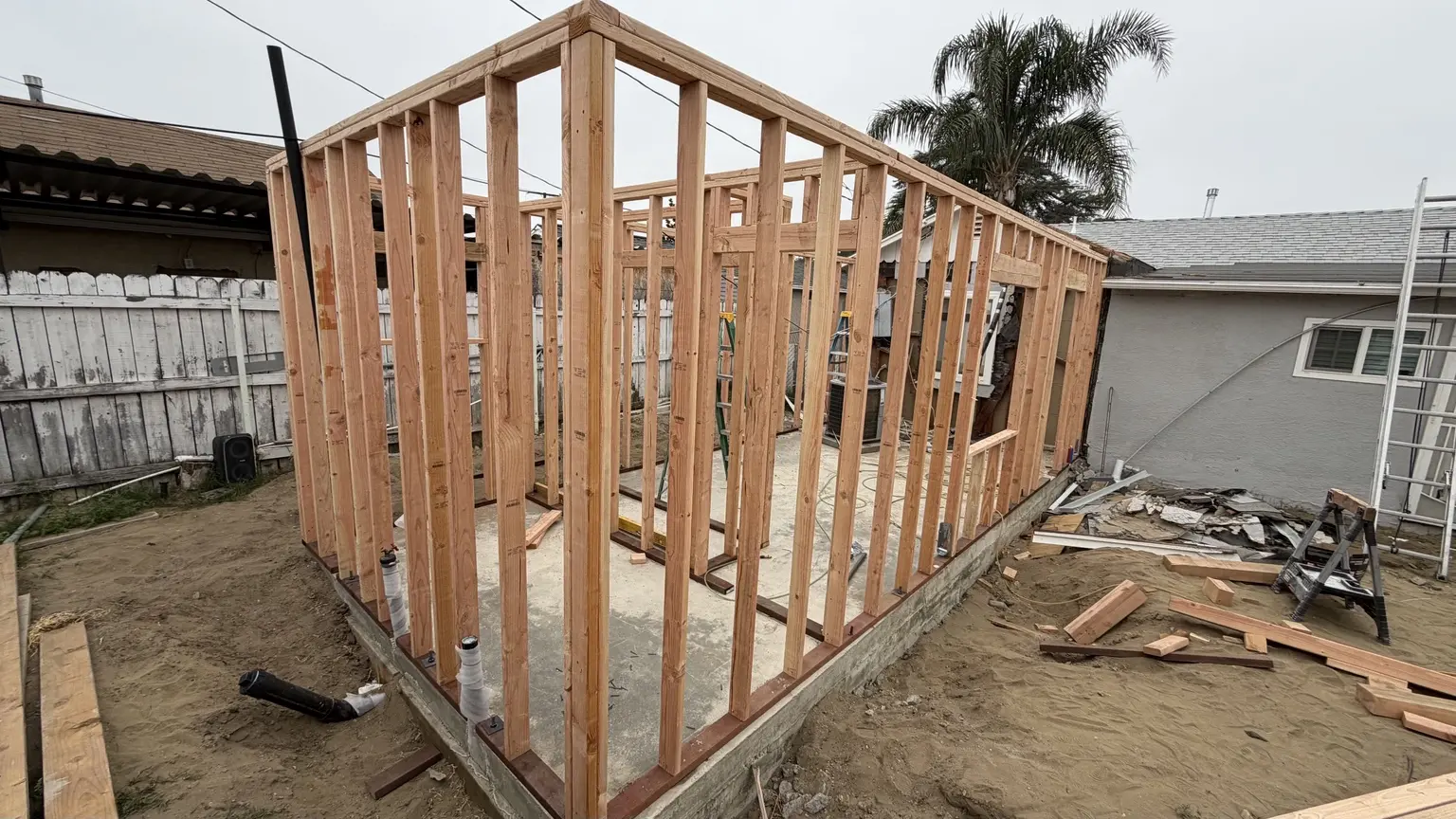
Most Los Angeles homeowners who have tried to build an accessory dwelling unit have a story about waiting on plan check. A new appeals court decision from our own district gives those stories more weight. On October 23, 2026, the California Court of Appeal ruled that a homeowner whose ADU permit took more than three years can take his city to court and ask for damages. Here is what happened, what the court actually decided, and what it means if you are planning an ADU in the San Fernando Valley or anywhere in LA County.
The case: three years for one ADU
The case is Shi v. City of Palos Verdes Estates (case B350195), decided by the Second Appellate District, Division Four — the appeals court that hears cases from Los Angeles County. The opinion is certified for publication, which means courts can cite it in future cases.
According to the homeowner’s complaint, which the court had to accept as true at this stage:
- Wei Shi applied in 2020 for a permit to build an ADU, planning to finish it at the same time as work on the family home.
- The city told him he would need a conditional use permit, discretionary review and approval from the Palos Verdes Homes Association Art Jury.
- He alleged that a planning commissioner lobbied his neighbors against the project.
- The city approved the ADU in 2023, more than three years after he applied.
- He estimated his losses at more than $1 million: lost use, higher construction costs, interest, extra design fees and lower property value.
A Los Angeles County Superior Court judge dismissed the lawsuit. The appeals court reversed that dismissal and sent the case back.
What the 60-day rule says
State ADU law is in Government Code section 66317. In plain terms:
- An ADU application must be approved ministerially — “without discretionary review or a hearing.” No conditional use permit, no design board vote, no neighbor hearing.
- If there is already a house on the lot, the city must approve or deny a completed application within 60 days.
- If the city has not acted on a completed application within 60 days, the application is “deemed approved.”
- If you ask for a delay, the 60-day clock stops for the length of the delay.
- If the ADU is filed together with a brand-new house on an empty lot, the city can wait and decide the ADU when it decides the new house.
- If the city denies the application, it must give you, in writing, a full list of what is wrong and how to fix it.
What the court decided — and what it didn’t
California’s Government Claims Act (Government Code section 815.6) makes a public agency liable when it breaks a mandatory duty that was meant to protect against the kind of harm a person suffered — unless the agency shows it acted with reasonable diligence. The city argued that the ADU law was written to increase housing supply in general, not to protect individual applicants. The court disagreed. It wrote that “permit seekers are the direct and intended beneficiaries of the relevant duty” and that section 66317 “was designed to protect against the delays that Shi suffered.”
It is important to read this carefully:
- No one has been awarded money. The ruling only means the lawsuit can go forward. The homeowner still has to prove his claims in the trial court.
- The court assumed, without deciding, the other parts of the claim, including whether the delay actually caused his losses.
- The ruling applies to cities that break a mandatory duty. A slow review caused by an incomplete application, or by delays the applicant asked for, is a different situation.
UC Davis law professor Chris Elmendorf told HousingWire the same reasoning could reach other state laws that require ministerial approval of housing, such as SB 684 and SB 1123. That question has not been decided.
What this means for an ADU in Los Angeles
For most homeowners, the practical value of this case is not a lawsuit. It is a reminder that the 60-day rule and the ban on discretionary review are real legal duties, and that the paper trail matters. A few steps help you use those rules if you ever need them:
- Submit a complete application. The 60-day clock runs from a completed application, so missing documents can restart your wait. Follow your city’s published ADU checklist.
- Keep a record of every date: when you submitted, when the city said the application was complete, each correction letter and each resubmittal.
- Answer corrections quickly and in writing. If you ask for more time, remember that it pauses the 60-day clock.
- If a city asks for a hearing, a conditional use permit or design board approval for an ADU that meets the ADU ordinance, ask in writing which rule requires it.
- If you are building a new house and an ADU together, expect the ADU decision to follow the house approval.
- If a review drags on far past 60 days, get advice from a land-use attorney before assuming an application is “deemed approved” and starting work.
Remember that a fast permit is only part of a smooth ADU. Plan check comments from building, fire, and utility reviewers often depend on how well the plans were drawn in the first place. Clear drawings, a correct site plan and early answers on utility connections save more time than any deadline. If you are still deciding what kind of ADU to build, our guide to California’s 2027 ADU law changes covers the rules that start next year.
BFF Construction and Design (CSLB #1109001) is a licensed general contractor based in Sylmar that builds ADUs, room additions and remodels across Los Angeles and Orange County. We can walk your lot with you and help you put together a complete permit package from the start.
Frequently asked questions
How long does a city have to approve an ADU permit in California?
Under Government Code section 66317, if there is already a house on the lot, the city must approve or deny a completed ADU application within 60 days. If it doesn’t act in time, the application is deemed approved. The clock stops if you ask for a delay.
Can I sue my city if my ADU permit is late?
In Shi v. City of Palos Verdes Estates (October 23, 2026), a California appeals court said a homeowner could bring a damages claim over a three-year ADU delay. The case is at an early stage and nothing has been awarded. Talk to a land-use attorney about your own situation.
Can a city require a hearing or design review for an ADU?
State law says ADU applications must be approved ministerially, without discretionary review or a hearing. Cities can still apply objective standards in their ADU ordinance and the building code.
Does this ruling apply in the City of Los Angeles?
The decision is a published opinion from the appeals court district that covers Los Angeles County, so courts there can rely on it. The 60-day rule in state law applies to cities and counties across California.
Related
- California Court of Appeal — Shi v. City of Palos Verdes Estates, B350195 (filed October 23, 2026)
- California Government Code section 66317 (ADU approvals, 60-day rule)
- HousingWire — Ruling: California cities risk a price to pay to delay housing permits (October 28, 2026)
- ABAG — ADU State Laws Summary and Checklist (July 2025)

 Not approved with HFS, or want to compare?